
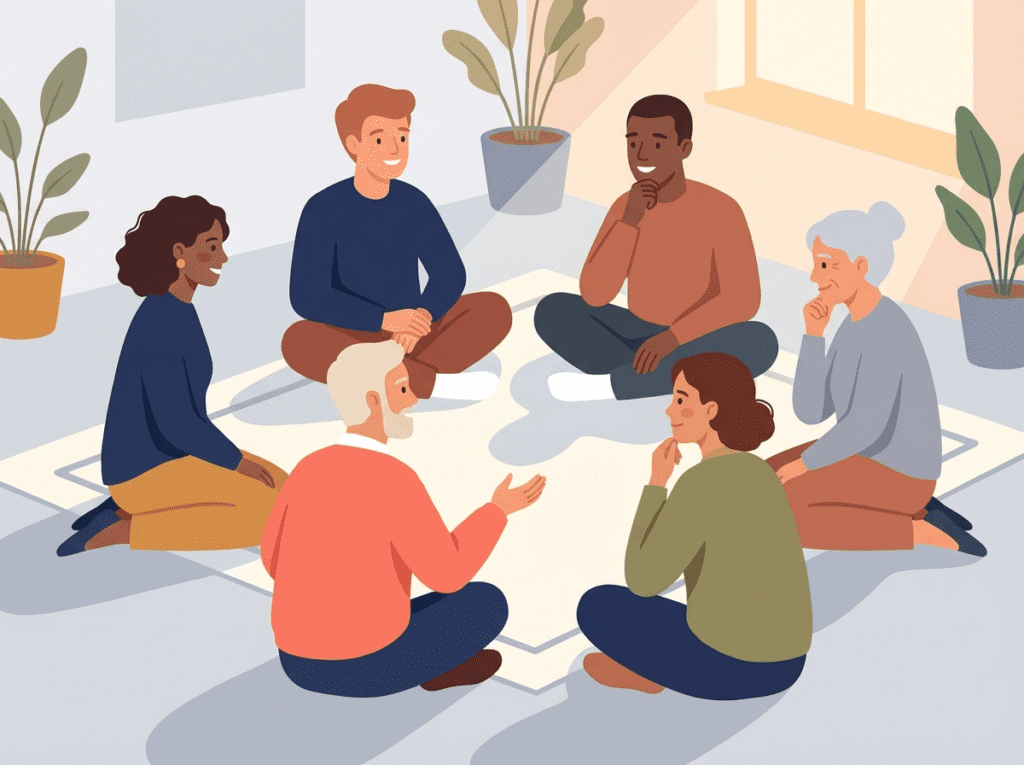


What Is Group Therapy and How Can It Help?
When people think about therapy, they usually imagine one person sitting with a therapist in a private session. That is one form of therapy, but it is not the only one. Group therapy offers a different kind of therapeutic experience, where several people meet together with a trained therapist to explore shared difficulties, relationships, and patterns of behaviour.
For many people, group therapy can be just as powerful as individual therapy, and sometimes even more so.
Comparing Group Therapy vs. Individual Therapy
| Feature | Group Therapy | Individual Therapy |
| Format | 6–10 participants + 1 therapist | 1 client + 1 therapist |
| Primary Focus | Relational patterns & shared support | Deep individual history & personal goals |
| Key Benefit | Realizing “I am not alone” | Dedicated, exclusive attention |
| Social Aspect | Practicing communication in real-time | Private, confidential reflection |
What Happens in a Group Therapy Session?
In group therapy, a small group of people meet regularly with a qualified therapist. Sessions often last around 90 minutes and take place weekly. The group may focus on a specific topic, such as:
-
Anxiety or depression
-
Relationship difficulties
-
Grief and loss
-
Trauma recovery
-
Addiction or behavioural patterns
-
Personal growth and self-understanding
Some groups are structured around a particular theme, while others are more open and allow members to bring whatever feels important each week. The therapist’s role is to guide the discussion, help the group stay respectful and safe, and encourage reflection on what is happening both within the conversation and within the relationships forming inside the group.
The Benefits of Group Therapy: Why it Works
One of the most powerful aspects of group therapy is realising that you are not alone. Many people arrive feeling isolated or believing their struggles are unique. Hearing others speak openly about similar experiences can be deeply relieving.
Group therapy can also help people understand how they relate to others. Because several people are interacting in the same space, patterns that may appear in everyday relationships often show up in the group as well. This creates opportunities to notice behaviours, receive feedback, and try different ways of responding. Participants often report:
-
Feeling less alone with their difficulties.
-
Gaining new perspectives from others.
-
Improving communication and relationship skills.
-
Developing greater self-awareness.
Is Group Therapy Confidential?
Confidentiality is a central part of the process. Therapists set clear agreements at the beginning to ensure that what is shared in the room remains private. While the therapist is bound by professional standards, group members are also asked to respect each other’s privacy. This shared commitment helps create an environment where people can speak honestly and feel safe.
Who Should Consider Group Therapy?
Group therapy can be particularly helpful for those interested in understanding their relationships. Because interaction is at the heart of the process, it is highly effective for:
-
Social anxiety
-
Repeat relationship patterns
-
Conflict or communication difficulties
-
Feelings of isolation or low self-esteem
Finding a Group Therapy Programme Near You
Many qualified psychotherapists and counsellors offer group therapy. Some are “open groups” (join when a space is available), while others are “closed groups” that run for a set number of weeks.
On The Therapist Finder, you can search for therapists who specifically offer group work alongside individual sessions. If you are curious, reaching out to a therapist who facilitates groups is a great first step to see if their specific focus matches your needs.