
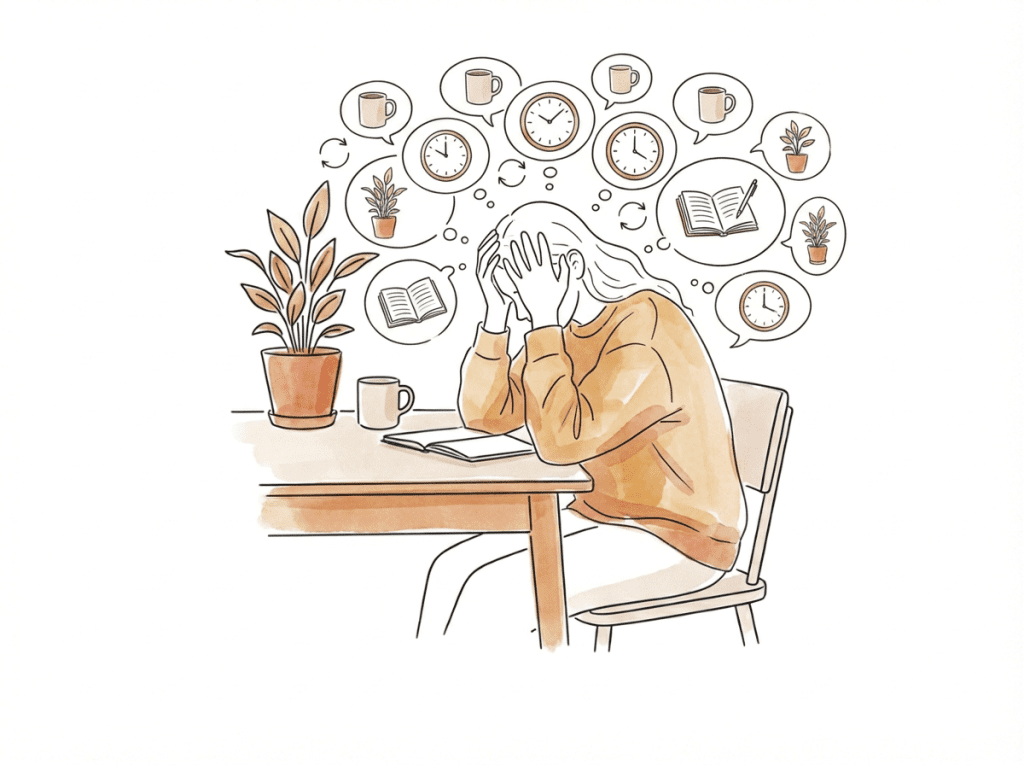


Stopping yourself from thinking about something starts with recognising the thought, interrupting the pattern, and gently shifting your attention. While you cannot fully control which thoughts appear, you can change how long you stay with them and how much power they hold.
Why can’t I stop thinking about something?
You may not be able to stop thinking about something because your brain sees it as important or unresolved. Stress, strong emotions, boredom, or anxiety can cause the mind to replay the same thought as a way of trying to gain control or find certainty.
What are intrusive thoughts?
Intrusive thoughts are unwanted thoughts, images, or memories that repeat themselves. They often feel distressing and difficult to switch off, even when you know they are unhelpful or exaggerated.
What causes obsessive or repetitive thinking?
Obsessive thinking is commonly triggered by stress, emotional conflict, fear of uncertainty, or unresolved experiences. The brain learns to return to the same thought because it feels familiar, even when it causes discomfort.
How do you stop obsessing over something?
You stop obsessing by noticing the thought without engaging with it. Acknowledge that it is there, then redirect your attention to something neutral or absorbing. Repetition helps the brain learn that the thought does not need constant attention.
What are practical ways to stop rumination?
Practical ways to reduce rumination include naming the thought, writing it down, focusing on physical sensations, and limiting exposure to triggers. Breathing exercises and grounding techniques can also calm the nervous system and reduce mental looping.
Does trying to stop thoughts make them worse?
Yes, trying to force thoughts away often makes them stronger. Suppression increases focus on the thought. Allowing the thought to exist without reacting usually helps it pass more quickly.
When should you seek professional help for intrusive thoughts?
You should seek professional help if repetitive thoughts affect your sleep, mood, relationships, or ability to function. A counsellor or psychotherapist can help you understand why the thoughts persist and teach ways to respond to them safely.
Can therapy help with constant overthinking?
Therapy can help with constant overthinking by identifying underlying patterns, emotional triggers, and coping strategies. Over time, this can reduce the intensity and frequency of intrusive thoughts.
How can you find support in the UK?
If you are struggling to stop thinking about something, you can find support through UK-based counselling and psychotherapy directories. These allow you to search by location, specialism, and availability, making it easier to access appropriate help.
When intrusive thoughts turn into checking, reassurance seeking or mental reviewing, it may be worth speaking to someone who works with OCD specifically. You can browse OCD therapists in London on the directory.