


Here is how to find a therapist in the UK (a simple guide)
Finding a therapist in the UK can feel confusing. There are thousands of therapists listed online, and it’s not always clear how to choose the right one.
Whether you’re looking for individual therapy, couples therapy, or support with anxiety, relationships, or life changes, the aim is not to find “the best therapist”, but someone who feels like the right fit for you.
This guide breaks down how to find a therapist in the UK in a clear, manageable way.
1. Start with what you need help with
Before searching for a therapist, it helps to have a rough sense of what you’re struggling with.
Common reasons people look for therapy include:
- Relationship difficulties or couples therapy
- Anxiety, stress, or burnout
- Low mood or depression
- Life transitions or feeling stuck
You don’t need a precise label. Many people start therapy unsure, and that’s completely fine.
2. Decide between individual or couples therapy
If you’re wondering how to choose a therapist, one of the first decisions is the type of therapy.
- Individual therapy focuses on your own thoughts, feelings, and patterns
- Couples therapy focuses on the dynamic between two people
If the issue sits within a relationship, working with a couples therapist is often more effective than trying to resolve it individually.
3. Choose between online therapy and in-person therapy
When searching for a therapist near you, you’ll usually have two options:
- In-person therapy offers a dedicated physical space and can feel more contained
- Online therapy in the UK gives you more flexibility and access to a wider range of therapists
Both can be effective. The choice depends on what feels more comfortable and practical for you.
4. Look for qualified and registered therapists in the UK
Therapy in the UK is not strictly regulated, so it’s important to check qualifications and professional registration.
Look for therapists registered with:
- BACP (British Association for Counselling and Psychotherapy)
- UKCP (UK Council for Psychotherapy)
- BPC (British Psychoanalytic Council)
This helps ensure a recognised level of training and ethical standards.
5. Use a therapist directory that keeps things clear
One of the biggest challenges when trying to find a therapist near you is the number of profiles available. Large directories can feel overwhelming, with hundreds of therapists listed in one area.
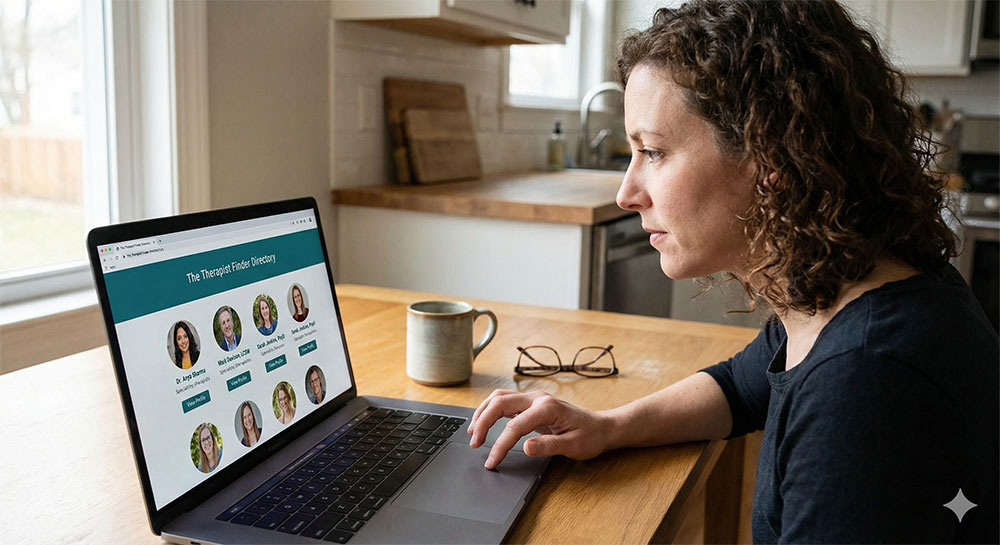
The Therapist Finder is a UK therapist directory designed to make this process simpler. It’s a smaller, therapist-run platform where you can browse a more manageable number of profiles and focus on finding the right fit, rather than scrolling endlessly.
6. Read therapist profiles, but don’t overanalyse
When browsing therapist profiles, you may notice they sound quite similar. Many therapists describe themselves as warm, empathetic, and non-judgemental.
Instead of focusing on wording, ask yourself:
- Does this therapist’s approach make sense to me?
- Do I feel a sense of clarity in how they describe their work?
- Am I drawn to this person in some way?
This is often a better guide than trying to compare profiles in detail.
7. Contact a few therapists
If you’re serious about starting therapy, it’s best to contact more than one therapist.
When you reach out, notice:
- How they respond
- Whether they feel straightforward and open
- Whether their availability and fees work for you
This helps you get a clearer sense of your options.
8. Use the first session to decide if it feels right
The first session is often called an initial consultation. It’s a chance to see how the therapist works and how you feel with them.
You might ask yourself:
- Do I feel listened to?
- Do I feel understood, even slightly?
- Can I imagine speaking to this person over time?
You don’t need certainty, just a sense that it could work.
9. Give it a few sessions, but trust your judgement
Therapy can take time to settle, and it doesn’t always feel comfortable at first.
But if after a few sessions you feel:
- Not understood
- Judged or dismissed
- Or simply not at ease
it’s okay to look for another therapist.
How to choose the right therapist in the UK
There isn’t a single “right” therapist, but there are some signs you’re on the right track:
- You feel able to speak openly
- The therapist seems thoughtful and attentive
- The sessions feel focused and meaningful over time
The relationship itself is one of the most important parts of therapy.
Final thoughts on finding a therapist
If you’re trying to find a therapist in the UK, the process doesn’t need to be perfect. It’s about starting, noticing how it feels, and adjusting if needed.
Using a clear, well-structured therapist directory can make this much easier. The Therapist Finder was created to simplify the process, helping you find a therapist without feeling overwhelmed by too many options.
Before you start contacting people, it helps to know the going rate. Our guide to how much therapy costs in the UK sets out median fees by type of therapist and by region.