
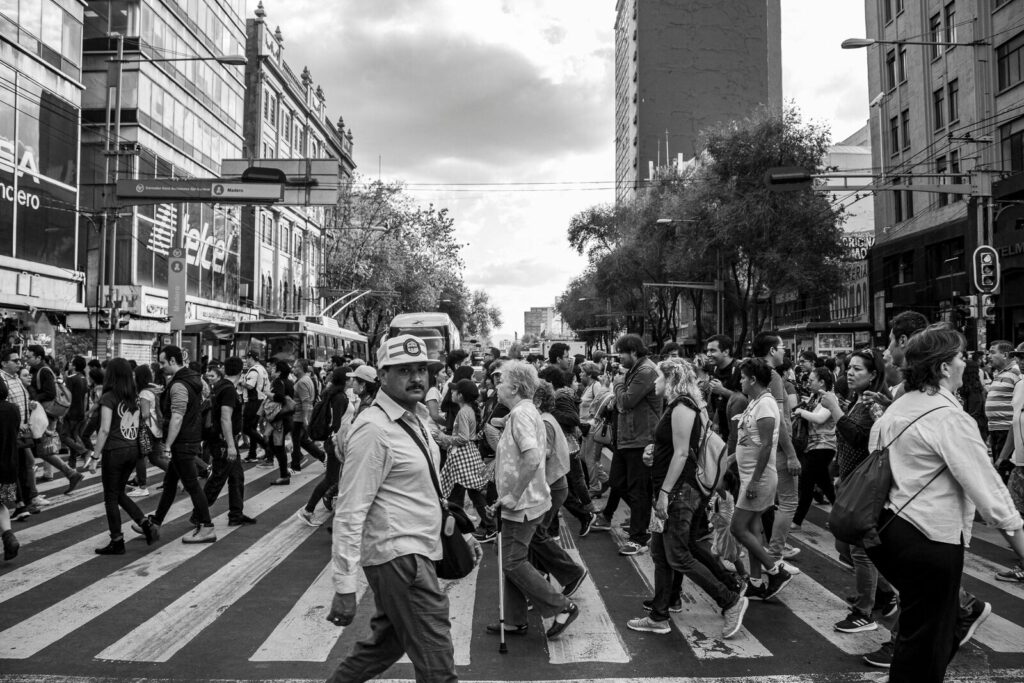


Therapy for Loneliness in a Big City: Why Feeling Alone in a Crowd Is More Common Than You Think
Therapy for loneliness in a big city is something that a growing number of people across the UK are quietly seeking, often while surrounded by millions of others and unable to fully explain, even to themselves, why they feel so profoundly alone. There is a particular quality to urban loneliness that makes it especially hard to acknowledge: when you live in London, Manchester, Birmingham, or any other densely populated city, the assumption, yours and everyone else’s, is that connection should be easy. Therapy for loneliness in a big city means working with a trained professional to understand what is driving your isolation, what has made genuine connection feel so elusive, and what a different kind of life might actually look like.
Loneliness in a big city is the experience of feeling emotionally disconnected and unseen despite being physically surrounded by people, and it is one of the most widespread and underacknowledged sources of psychological distress in urban life today.
It is not a personal failing. And it is not something you simply have to endure.
Why Loneliness Thrives in the UK’s Biggest Cities
The Paradox at the Heart of Urban Life
Cities promise connection. They are designed around density, shared spaces, and the proximity of enormous numbers of people. Yet for many residents, particularly those who have moved to a city for work, who live alone, or who belong to communities that are underrepresented in their immediate environment, urban life delivers something closer to the opposite: a constant awareness of other people’s social worlds from which one feels excluded.
The pace of city life compounds this. Long working hours, expensive social activities, the exhaustion of commuting, and the transient nature of many urban friendships, where people move frequently for work or housing, all work against the sustained, unhurried contact that genuine friendship requires. Many people in cities have large numbers of acquaintances and almost no one they would call in a crisis.
The Specific Pressures That Make City Loneliness So Hard to Escape
The cost of living in the UK’s major cities has created conditions in which people work longer hours, take on second jobs, and sacrifice leisure time simply to cover basic expenses. Social life becomes a luxury rather than a given, and the spontaneous, repeated contact that builds real connection over time is one of the first things to go. Many people find that by the time they have a free evening, they are too depleted to use it well.
Social media creates a particularly cruel amplification of urban loneliness. It presents a curated version of other people’s social lives, full of gatherings, groups, and effortless belonging, against which one’s own quiet evenings can feel like evidence of fundamental inadequacy. The comparison is always unfair and always damaging.
Mind identifies loneliness as a significant risk factor for mental health difficulties including depression and anxiety, and notes that it can affect people of any age, background, or circumstance, regardless of how socially active their lives appear from the outside.
When Loneliness Becomes Something Deeper
For some people, urban loneliness is primarily circumstantial, a product of a recent move, a relationship ending, or a period of intense work that has crowded out social life. For others it has a longer and more complex history, rooted in difficulties with trust, early attachment experiences that made closeness feel unsafe, or a persistent sense of being fundamentally different from the people around them.
It is this deeper form of loneliness, the kind that persists even when opportunities for connection are present, that therapy is particularly well placed to address.
Therapy for Loneliness in a Big City: Understanding What Actually Helps
Step One: Distinguishing Between Circumstantial and Relational Loneliness
Effective therapy for loneliness in a big city begins with understanding which kind of loneliness you are dealing with. Circumstantial loneliness, the product of recent change or specific life conditions, responds well to practical interventions: building routine, creating opportunities for repeated contact, and investing in activities that connect you with others who share your interests or values.
Relational loneliness, the experience of feeling alone even in the company of others, or the inability to let people in even when they are willing, requires a different kind of attention. A skilled psychotherapist will help you identify which is most prominent in your experience and work with you accordingly.
Step Two: Examining What Gets in the Way of Connection
Many people who experience chronic loneliness in cities are not lacking in social opportunities. They are struggling with something internal that makes taking those opportunities feel too risky, too effortful, or too likely to result in disappointment. This might be a fear of rejection rooted in earlier experiences, a deeply held belief that they are fundamentally uninteresting or unlovable, or an anxiety about social situations that makes the anticipation of contact more exhausting than the contact itself.
Identifying these internal barriers is central to changing the pattern. A counsellor experienced in attachment, social anxiety, or relational difficulties will be well-placed to help you understand where these barriers came from and how they are currently operating.
Step Three: Working With Social Anxiety Where It Is Present
Social anxiety and loneliness are closely related and frequently co-occur. The fear of being judged, of saying the wrong thing, or of being exposed as somehow inadequate in social situations can lead to a pattern of avoidance that progressively narrows a person’s social world. Cognitive behavioural therapy has a strong evidence base for social anxiety and can help people to identify and challenge the specific thoughts that drive avoidance, gradually rebuilding confidence in social situations through structured, manageable steps.
Mind provides accessible information about different therapeutic approaches and what to expect from the process, which can be helpful when considering where to begin.
Step Four: Building the Conditions for Connection in Your Specific City
Practical change matters alongside psychological work. Building connection in a large city requires a different approach from smaller communities: it tends to depend on consistent, repeated contact in specific contexts rather than on chance encounters. Joining groups, classes, or community organisations that meet regularly creates the conditions in which acquaintances can develop into genuine friendships over time, but only if the internal barriers to connection are also being addressed.
The Therapist Finder lists only verified professionals whose qualifications have been confirmed before their profiles appear in the directory. A private therapist with experience in loneliness, social anxiety, or attachment difficulties can help you work on both dimensions simultaneously, the internal and the practical, in a way that self-help resources alone rarely achieve.
Step Five: Developing a More Honest Relationship With Your Own Need for Connection
Many people who experience significant loneliness have become skilled at minimising or denying their need for connection, often because expressing that need has previously led to disappointment, rejection, or shame. Part of therapy for loneliness in a big city involves developing a more honest and compassionate relationship with that need, recognising it as entirely human rather than as evidence of dependence or weakness.
This shift in relationship with one’s own needs is often the beginning of a genuine change in how a person shows up in social situations, with less performance, less defensiveness, and a greater capacity to be actually known by the people they are with.
How a Psychotherapist Can Help With What Self-Help Cannot Reach
There is a great deal of practical advice available about combating loneliness in cities, and some of it is genuinely useful. Joining clubs, saying yes to invitations, volunteering, and reducing screen time all have their place. But for people whose loneliness has a deeper relational root, these strategies produce only surface-level change, because the internal patterns that make genuine connection difficult remain intact.
A qualified psychotherapist provides something that no self-help strategy can replicate: a consistent, boundaried, genuinely attuned relationship in which the experience of being known by another person, without pretence or performance, can be had directly. For many people struggling with loneliness, this therapeutic relationship is the first experience of real connection they have allowed themselves in years, and it changes what feels possible in the rest of their lives.
Counselling in the UK is widely available both in person and online, which means that even within a busy city schedule, finding a qualified therapist and beginning that work is an achievable and realistic step.
Frequently Asked Questions About Therapy for Loneliness in a Big City
Can therapy actually help with loneliness, or do I just need to meet more people?
Therapy is particularly effective when loneliness is connected to internal barriers such as social anxiety, fear of rejection, or difficulty trusting others. Meeting more people helps when circumstances are the primary issue, but when something internal is preventing genuine connection, addressing that through counselling produces more lasting change than social activity alone. Many people find that therapy changes the quality of their existing relationships as much as it helps them build new ones.
Is loneliness in a city something a therapist will take seriously?
Yes. Loneliness is a recognised source of significant psychological distress with well-documented links to anxiety, depression, and physical health difficulties. A qualified psychotherapist will treat it with the same seriousness as any other presenting difficulty. You do not need to have a diagnosed mental health condition to seek and benefit from professional support.
How long does therapy for loneliness usually take?
This depends on the nature and depth of the difficulty. Where loneliness is primarily circumstantial, a shorter focused course of therapy may produce meaningful change within a few months. Where it is rooted in longer-standing relational or attachment patterns, longer-term counselling provides a more thorough and lasting resolution. Your therapist will discuss realistic expectations with you after an initial assessment.
Feeling Alone in a City Full of People Is Not How Things Have to Stay
Urban loneliness is real, it is widespread, and it is one of the less visible mental health challenges of modern life in the UK. The fact that you are surrounded by people does not make your experience of isolation any less valid or any less worthy of attention. With the right professional support, understanding what drives your loneliness and building a life with more genuine connection in it is entirely achievable.
If you are ready to find a verified psychotherapist or counsellor with experience in loneliness, social anxiety, or relational difficulties, The Therapist Finder is a reliable place to begin. Every profile in the directory includes the practitioner’s stated specialisms, session fees, and current availability, so you can make a confident, informed choice without uncertainty.
Ready to find the right support? Find a therapist now.
Loneliness inside a relationship is one of the harder kinds to name. If that feels familiar, you can find relationship counselling in Dulwich through the directory.