
The therapists on this page offer relationship counselling in Islington and nearby areas, with both individual and couples sessions available. All are accredited by recognised professional bodies.
Therapy in Islington
Islington is a vibrant inner north London borough known for its independent restaurants, bars, and arts venues centred on Upper Street and the Angel area. It has a mix of creative professionals, long-term residents, and families, alongside a strong community and cultural scene. Islington is well-served by the Victoria and Northern lines, making it one of the most accessible parts of north London.
What is relationship therapy?
Relationship difficulties are one of the most common reasons people seek therapy — whether they come alone or with a partner. They can range from recurring arguments and communication breakdowns to emotional distance, trust issues, or the lingering effects of an affair or betrayal.
Sometimes there is no dramatic event — just a gradual growing apart, or a persistent sense that real connection has been lost. Individual therapy for relationship issues can be just as valuable as couples therapy — it helps you understand your own patterns, what you bring to relationships, and what you genuinely need.

Lily Von Kalbach
I’m a UKCP-accredited therapist with an MA and Postgraduate Diploma in Counselling and Psychotherapy. I use integrative approaches in…
View profile
Monica Mendes
My name is Monica, and I’m a registered therapeutic counsellor and life coach. You may be here because life feels overwhelming…
View profile
Chris Bancroft
I work with individuals, couples, polycules and families of all genders, sexualities, backgrounds and neurotypes. I am a gay man and have…
View profile
James Angel
I am an attachment-based psychotherapist trained at The Bowlby Centre, where I now also teach, and I have previously worked within the NHS…
View profile
Farah Chowdhury
BACP-registered integrative counsellor and psychotherapist, and the founder of A Space for You Counselling. She works from locations in…
View profile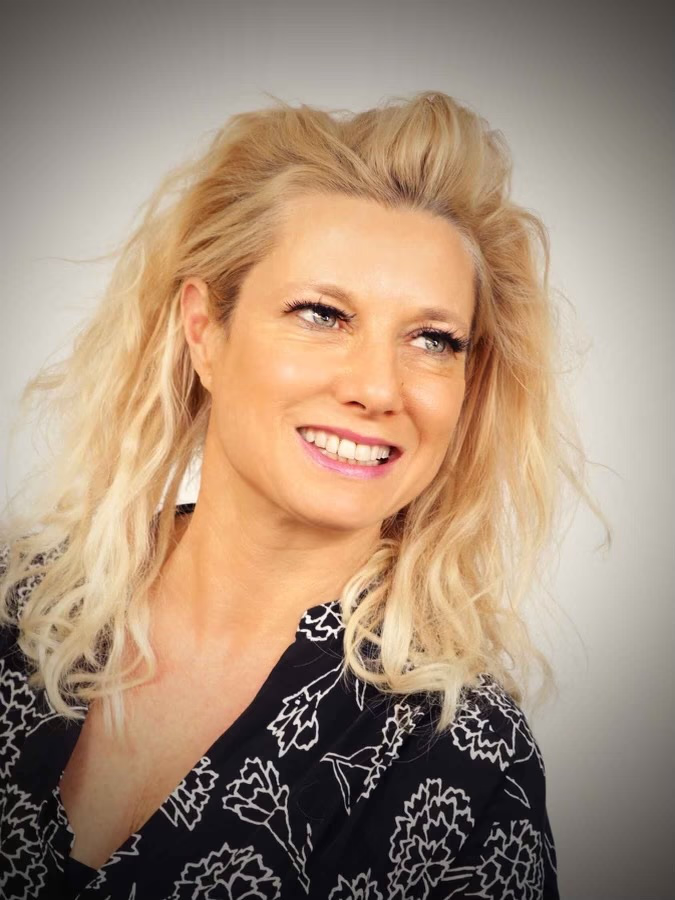
Rebecca Sparkes
UKCP-accredited psychotherapist with over 15 years of experience in private practice and the NHS, specialising in addiction, eating…
View profile
Joe Day
I am a BACP-registered integrative counsellor, trained in humanistic and psychodynamic approaches. I offer a calm, confidential space where…
View profile
Zak Hulstrom
I’m Zak – I am passionate about therapy that helps you to identify and work through patterns and behaviours. I’ll support you to gain…
View profile
James Crossland
I am an integrative counsellor with experience working with individuals and couples, specialising in relationship and attachment issues…
View profile
Ta-You Chiu
I am a BACP-registered Integrative Psychotherapist and began exploring this profession in 2017. I have previously worked for the NHS and…
View profile
Anastasia Moraiti
I am a qualified Dance Movement Psychotherapist and registered member of the Association for Dance Movement Psychotherapy UK, practising…
View profile
Fiona Tóth-Gillies
As a registered Art Psychotherapist (HCPC, BAAT), I have over 17 years experience working with adults and young people in Australia and the…
View profileWhat to expect from relationship therapy
Relationship therapy — whether individual or with a partner — typically begins with an exploration of current patterns: what tends to happen, how each person responds, and what has been tried so far. From there, the work goes deeper: exploring early attachment experiences, the models of relationship formed in childhood, and the hopes and fears that shape behaviour in intimate relationships.
Attachment-based approaches, psychodynamic therapy, and emotionally focused therapy are all commonly used. Progress in relationship therapy often feels non-linear — things sometimes feel harder before they feel better, as honest communication replaces silence or avoidance.
Frequently Asked Questions
Should I do individual or couples therapy for relationship issues?
Both are valuable. Individual therapy helps you understand your own patterns, what you bring to relationships, and what you need. Couples therapy brings both partners into a supported dialogue. Many people do individual therapy first, then couples therapy, or both simultaneously with different therapists.
Can therapy help after an affair?
Yes — therapy can be enormously helpful after a betrayal, whether the aim is to rebuild the relationship or to process what has happened and find a way forward. Both couples therapy and individual therapy are useful. Rebuilding trust takes time, but many couples do recover from affairs with the right support.
What if my partner refuses to come to therapy?
You can still benefit significantly from individual therapy. Understanding your own patterns and needs is valuable regardless of whether your partner is involved. Individual therapy may also help you decide what you want, and sometimes partners become open to joining later.