
Written by Luisa Kos
Table of contents


Child & adolescent therapy
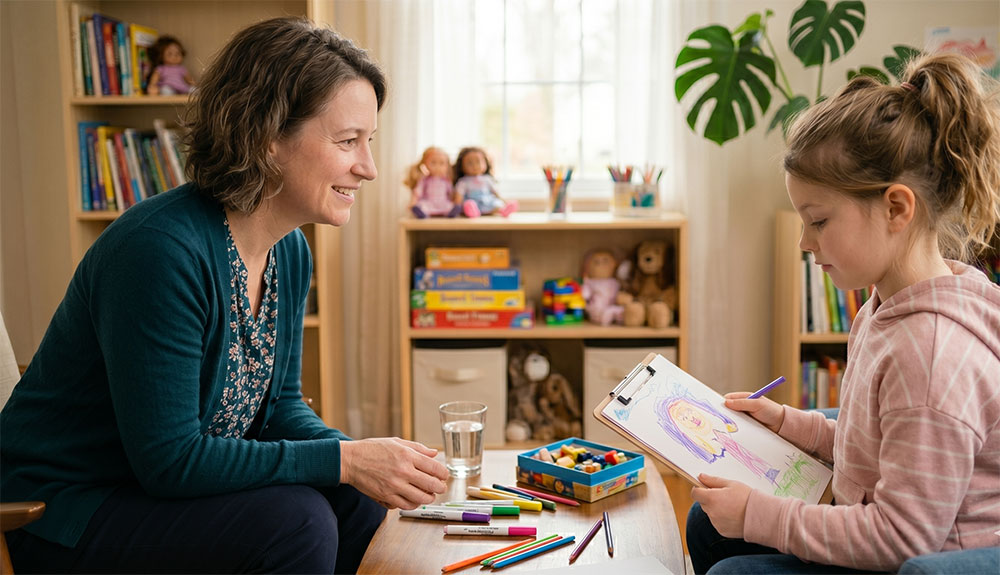
Children and teenagers face unique challenges as they grow, develop, and navigate the world around them. From emotional struggles and behavioural concerns to academic stress and family changes, young people often need a safe space to express their feelings and process their experiences. Child and adolescent therapy provides the support they need to build resilience, improve emotional well-being, and develop healthy coping strategies.
Why therapy is important for children and adolescents
Young people may not always have the words to express their emotions or the tools to manage challenges effectively. Therapy provides them with a safe, supportive space to explore their thoughts and feelings, understand their behaviours, and develop healthier ways of coping.
Common reasons for seeking child or adolescent therapy:
- Anxiety, stress, or excessive worrying
- Depression, low mood, or withdrawal from activities
- Behavioural difficulties at home or school
- Low self-esteem or social difficulties
- Coping with parental separation or family changes
- Grief and loss
- Bullying or peer pressure
- Academic stress and performance anxiety
- Emotional regulation difficulties
- Trauma or adverse childhood experiences
- Self-harm or risky behaviours
Addressing emotional and behavioural concerns early can prevent challenges from becoming more significant later in life.
How therapy helps young people
Therapists use a range of age-appropriate techniques to help children and teenagers express themselves, process emotions, and develop essential life skills.
Therapeutic approaches may include:
- Play therapy – Using toys, games, and creative activities to help younger children express emotions
- Cognitive Behavioural Therapy (CBT) – Teaching practical strategies to manage anxiety, stress, and negative thinking patterns
- Art and creative therapies – Encouraging self-expression through drawing, painting, or music
- Mindfulness and relaxation techniques – Helping children and teens manage stress and develop emotional awareness
- Family therapy – Supporting healthy communication and relationships within the family unit
- Trauma-informed therapy – Providing support for children who have experienced difficult or distressing events
The right therapeutic approach depends on the child’s age, personality, and the specific challenges they are facing.
Supporting parents & families
Therapy is not just about helping the child—it’s also about supporting parents and caregivers in understanding and responding to their child’s needs. Many therapists offer parent guidance and family sessions to improve communication, strengthen relationships, and provide practical strategies for handling challenges at home.
A safe & understanding environment
Many young people struggle to talk about their feelings, especially if they fear judgment or don’t know how to articulate what they’re experiencing. Child and adolescent therapists create a space where they feel comfortable, respected, and heard.
Therapists in our directory are trained to work with young people in a way that builds trust and allows them to open up at their own pace. Sessions are tailored to be engaging, supportive, and developmentally appropriate.
Every child wants to succeed. Every child wants to have a good relationship with others. Every child wants to have a sense of belonging and significance. When we remember this, we will give misbehaving children the benefit of the doubt. Instead of assuming they want to be difficult, we will assume they want positive results and are simply confused about how to achieve them.
Jane Nelsen
Find the Right Therapist for Your Child
Choosing the right therapist can be an important step in supporting your child’s well-being. Our directory allows you to search for child and adolescent therapists based on location, therapy style, and areas of expertise. Whether you’re looking for in-person sessions or online support, you can find a therapist who understands your child’s needs.
Start your search today and help your child build the emotional strength and resilience they need to thrive.
Therapists who can help children and adolescents

Jackie Van Roosmalen
I started my professional journey as a creative arts therapist and I worked in community settings including residential homes, schools and mental health centres. I then worked for several years as a health care assistant in an in-patient adolescent hospital before starting my clinical training. Whilst training I worked in Brent CAMHS for 6 years and post qualification I worked as a Highly Specialist Child & Adolescent Psychotherapist in Sutton CAMHS for 7 years. I set up an Independent Practice in 2014 and this is where I currently work.

Elizabeth Power
Under 5’s, parent-infant/child Psychotherapy. Individual Psychotherapy 0-25yrs, from once weekly to intensive, (up to 4 times per week).

Janine Hayward
Hello. Do you struggle with anxiety, work, relationships or parenting stress? Are you overwhelmed, worried, depressed, stuck, low in self-esteem or navigating ADHD, Autism? You are not alone. Does your need to be perfect take up too much time? Is trauma, an illness, a major loss or death hurting you? It doesn’t have to be that way. My team and I help people like you understand distress, learn new skills for managing uncomfortable emotions and thoughts, improve relationships, motivation, find meaning and focus. Our team of Clinical Psychologists (HCPC) have over 10 years of experience delivering effective therapy to children, teens, parents, adults and couples. The research-based therapies we offer include Acceptance and Commitment Therapy(ACT), Cognitive Behavioural Therapy (CBT), Mindfulness (general/health & pain), Compassion Focussed Therapy (CFT), EMDR, DBT, Narrative Therapy & Solution Focussed Therapy and Counselling. Weekly/fortnightly sessions, Online (proven to be as effective as face to face) and some face to face. We help adults grow psychological flexibility & resilience so that anxiety, depression, low self esteem, lack of clarity in purpose, direction, identity, distress and stress, stop interfering with your life. I have worked in demanding corporates and have experience of major health, family and life events so can quickly understand the difficulties you face or may wish to change. Most of our work is online however we do have locations in Harley St London, Near Bank Station in London and Plymouth. Contact me now; I look forward to meeting and helping you and or your family.

Cassie Beattie
I have a lot of experience of working with children, families, young people and their families. I work as part of a team practice where we are able to share expertise, work with members of families, and add in professional care as needed. I am well equipped and experienced to work with most areas of childhood distress, mental health or family trauma.
Kristyna Hallam
My main framework is systemic family therapy, which looks at how relationships may influence how you feel and behave. We explore patterns within these systems that may be affecting your well-being. I am also trained in DBT, so I can offer you skills to cope with emotions, stress or interpersonal situations. I am happy to teach you about mindfulness as well.

Becs Scantlebury
Specialising in neurodivergence and identity: Autism, ADHD, sensory processing, autistic burnout, anxiety, depression, Rejection Sensitive Dysphoria (RSD), Pathological Demand Avoidance (PDA) and more.

Joseph Madden
I am a fully qualified psychodynamic psychotherapist, holding a master’s degree from The University of London. I am a registered member of the BACP and follow their ethical framework and professional standards. My training has also included studies in philosophy, neuroscience, psychology, and modules in clinical psychology at King’s College London, which help inform my approach to understanding how past experiences shape our present. I currently practice at The Couch – Psychological Therapies in Peckham, Hackney Therapy Centre, Consulting rooms in central London and am the Co-Founder of Men Connect – talking groups for men. Before opening my private practice, I trained in Clinical Psychology at King’s College London with Guy’s Hospital. I also spent over a decade working internationally in senior leadership roles. This gives me a lived understanding of the pressures faced by individuals, the visibility, responsibility, performance demands, and internal standards that often go unseen.

Rachel Jones
As an experienced family therapist and nurse. I have worked with children, teenagers, adults, couples and families for over 14 years. I specialise in working with mental health challenges, relationships, self-harm, anger, anxiety, low mood, self esteem, emotional regulation and eating and body image difficulties. I work with couples and families to understand and change relationship and communication patterns that are having a negative impact. Alongside working with individuals, families and couples, I have an interest in supporting clients who are neurodiverse, diagnosed or self-diagnosed, to live in an authentic and unmasked way that aligns with their values. I provide a compassionate and open space and embrace working in a neuro-affirming way to support you to feel empowered and heard.

Georgie Gee
I have a wealth of knowledge about child and adolescent development as well as over 18 years of experience of working with young people (up to the age of 25) and their families. Areas that I work with cover the normal struggles of adolescent development including, gender, identity and independence. As well as school refusal, self-harm and the impact of divorce/separation and grief on the family dynamics. No problem is too small or to inconsequential to be thought about. I aim to provide a safe and confidential provision that allows one to feel listened to and experience validation. I also think about the unconscious patterns of relating that get acted out whether that be with the child or young person or within the wider family that can impact how young people relate to each other and or their family members and peer group. I am also able to work with parents in a non judgemental way to help you support your adolescent to grow, develop and repair family disharmony. I also have experience with care experienced and young people at boarding schools. It all begins with a open conversation.

Rebecca Greene
I provide counselling and psychotherapy for children and young people in a safe and supportive environment where they can explore their thoughts, feelings, and life challenges. Whether it’s anxiety, stress, low mood, trauma, grief, low self-esteem, bullying, or issues with relationships and identity, therapy can help young people work through a wide range of emotional, behavioural, and psychological concerns. My approach is tailored for young people who need low-level intervention to better understand themselves, manage their emotions, and learn self-regulation. I work with those who want to explore their sense of self, helping young people express their emotions and thoughts in a safe, healthy environment. My therapeutic approach is integrative, meaning I adapt each session to suit the unique needs of the individual. I draw from various therapeutic modalities, including child-centred and psychodynamic approaches, Cognitive Behavioural Therapy (CBT) and Attachment Theory, all with a strong focus on the young persons well being.